Understanding Your Radon Test Results: Next Steps for Your Home
Radon gas is a natural concern for homeowners in many parts of the country, including York, Pennsylvania. Testing for radon is the first step toward understanding whether your home has elevated levels. Once you have completed a test, the numbers on the report can sometimes feel confusing. Knowing what those numbers mean and what to do next is important for making informed decisions about your home's air quality.
Radon is measured in picocuries per litre (pCi/L). The Environmental Protection Agency has established an action level of 4.0 pCi/L. If your test shows a result at or above this level, the agency recommends taking steps to reduce the radon concentration in your home. Results below 4.0 pCi/L are generally considered acceptable, but even lower levels carry some risk. Many homeowners choose to mitigate when results are between 2.0 and 4.0 pCi/L, especially if they live in areas with known radon potential.
When you receive your radon test results, the first thing to check is the type of test that was used. Short-term tests typically last between two and seven days. They use activated carbon or other media to capture radon. These tests give you a quick snapshot of radon levels under current conditions. Long-term tests run for ninety days or more and provide a better average reading because radon levels can vary with weather, season, and how the house is used. A short-term test can be a good starting point, but a long-term test gives a more reliable picture of your home's year-round radon exposure.
It is also worth noting that test results can be influenced by conditions during the testing period. For instance, if the test was conducted during a period of heavy rain or when windows were open frequently, the numbers may not represent typical conditions. The instructions that came with your test kit will tell you the best conditions for an accurate reading. Following those guidelines closely helps ensure the result you get is meaningful.
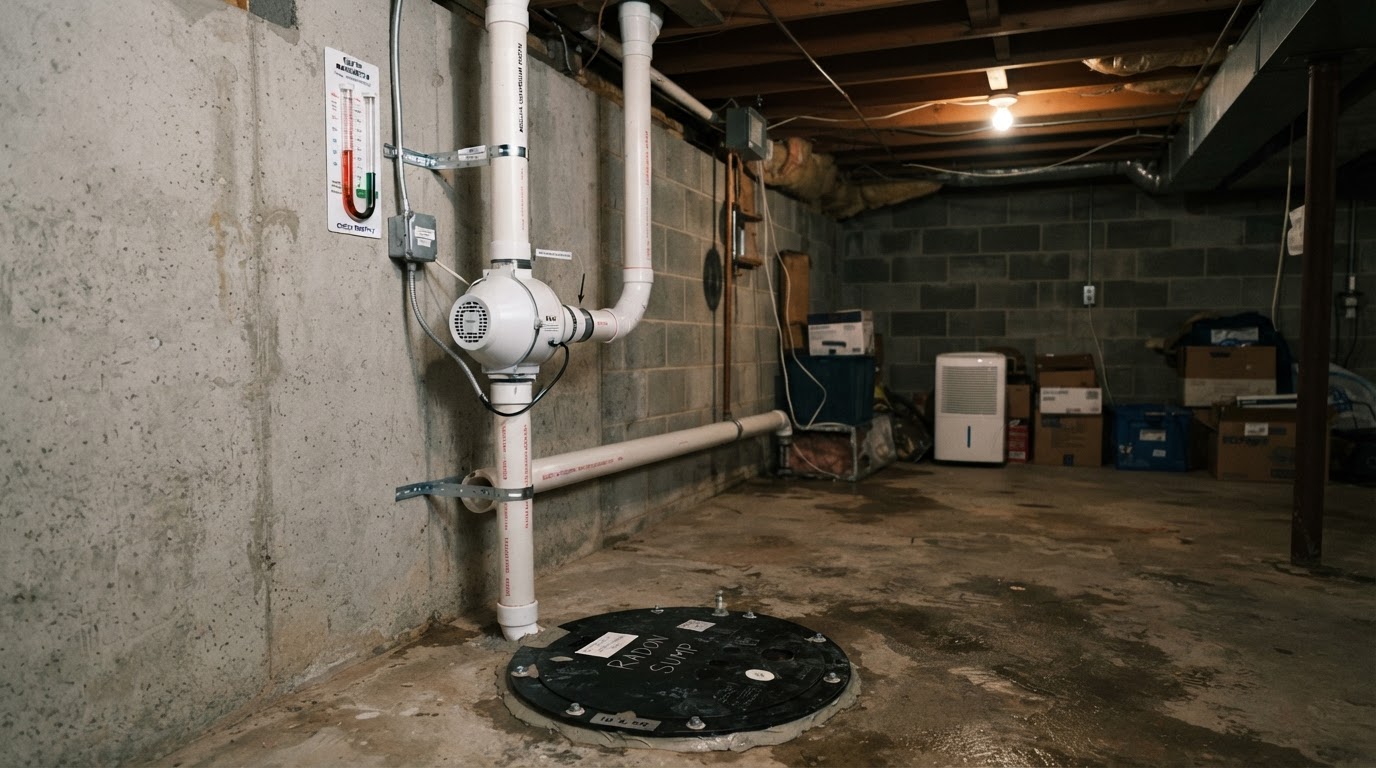
If your radon test results come back above 4.0 pCi/L, do not panic. Radon levels can be reduced effectively with a mitigation system. The most common approach for homes in this region is sub-slab depressurization. This system uses a fan to draw radon from beneath the foundation and vent it safely outside. A certified contractor can evaluate your home's construction and recommend the right design. Many factors affect the choice of system: the type of foundation, the layout of the house, and the soil conditions around the property.
A certified contractor will also check for other entry points for radon, such as cracks in the slab, gaps around pipes, and open sump pits. Sealing these openings is part of the mitigation process, though sealing alone is seldom enough to bring high levels down to safe values. The fan and vent pipe are the active parts of the system that do the real work. After installation, the contractor should perform a follow-up test to confirm that the system is working as intended.
Even if your results are below the action level, it is a good idea to test again every two years or after any major renovation that affects the foundation or ventilation of your home. Radon levels can change over time as the ground shifts, as new construction occurs nearby, or as your home's heating and cooling patterns change. A test that was accurate five years ago may not reflect current conditions.
Understanding your radon test results also means knowing what kind of follow-up action makes sense for your situation. Some homeowners may want to retest with a long-term kit to confirm a borderline short-term reading. Others may feel comfortable proceeding directly to mitigation if the short-term result is clearly above the action level. The choice depends partly on your comfort with uncertainty and partly on how soon you plan to address the issue.
If you are preparing to sell your home, radon test results often come up during the transaction. Buyers in York County are increasingly aware of radon as a local concern. Having a recent test result, especially one that shows levels below 4.0 pCi/L, can be a selling point. If the test shows elevated levels, having already installed a mitigation system can remove a negotiation hurdle. Some sellers choose to test and mitigate proactively before listing the house.
One common question is whether to use a short-term test or a long-term test when you are in a hurry. Short-term tests are convenient and can give you a quick answer, but they are more susceptible to weather and daily activity patterns. If you use a short-term test, try to keep windows and doors closed as much as possible during the test period, and avoid operating whole-house fans or ventilation systems that could dilute the radon concentration. The test kit instructions will tell you the specific conditions to maintain.
Another point to consider is the placement of the test kit. The kit should be placed in the lowest livable level of your home, such as a basement or a first-floor room if there is no basement. It should be at least twenty inches above the floor and away from drafts, heat sources, and exterior walls. Placing it in a bathroom, kitchen, or laundry room can skew results because of humidity and air movement. Following the placement instructions carefully gives you a result that reflects the radon level in the area where your family spends time.
Once you have your radon test results, you might also wonder about the difference between a screening test and a diagnostic test. A screening test is the standard approach for initial assessment. A diagnostic test may be used by a certified contractor to pinpoint the source of radon entry or to evaluate the effectiveness of a mitigation system. Your initial test result is almost always a screening result, and that is perfectly fine for deciding on next steps.
For homeowners who are handy, there is also the option of doing the test themselves with a mail-in kit. These kits are widely available and relatively inexpensive. The key is to send the kit to a laboratory promptly after the test period ends. Delays in mailing can affect the accuracy of the result. Once the lab processes the sample, you receive a report with the radon concentration in pCi/L. That report is your radon test results in their simplest form.
If you are unsure how to interpret the numbers or what to do next, a certified contractor can help. These professionals have experience with local soil conditions and building practices. They can explain what your specific results mean for your home and recommend a course of action that fits your situation. Many contractors offer free consultations or can provide a quote over the phone. The important thing is not to ignore the results. Radon is a health concern, but it is one that can be managed with the right information and the right help.
Keeping a record of your radon test results is also a good practice. If you test again in a few years, you can compare the numbers to see if levels have changed. Some homeowners test seasonally to see how weather patterns affect radon entry. This kind of ongoing attention helps you stay ahead of any changes and ensures your home remains a safe environment for your family.
In summary, radon test results give you a clear starting point. Whether the numbers are low or high, you have options. Testing is simple and inexpensive. Mitigation, if needed, is a proven solution that many homes in York County have used successfully. The key is to take that first step and then follow through with the right action for your home.